



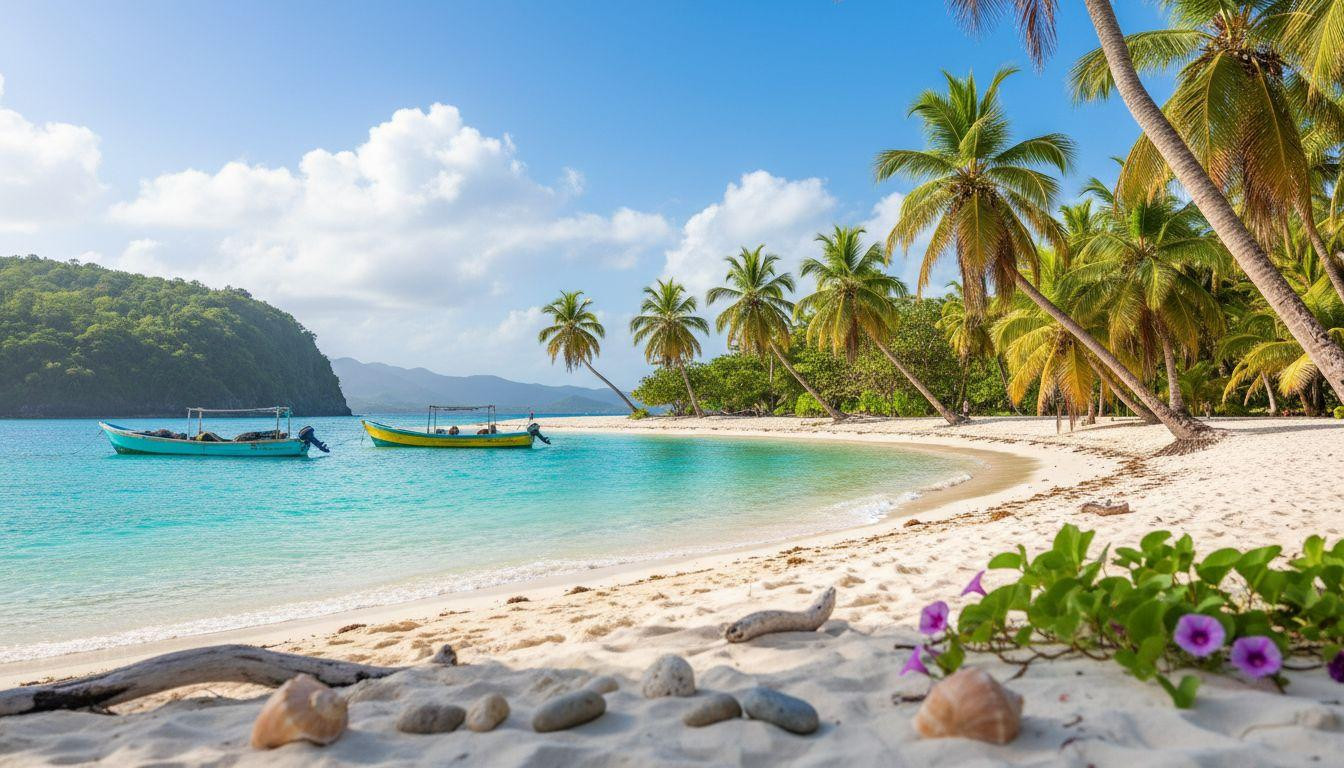
Speedboats cruise through turquoise waterways towards white sand beaches fringed with palm trees. This is Playa Rincon, the Dominican Republic’s secret Maldivian moment on the Samana Peninsula. The crystal-clear water shows ripples in the sand 20 feet below, and palm trees provide natural shade along 4.1 miles of undeveloped shore.
It’s 84°F in January and the beach is empty in the morning. Humpback whales invade offshore waters during their migration season. The bay is protected by coral reefs and jungle-covered headlands, creating a shallow lagoon that replicates expensive Indian Ocean resorts at a fraction of the cost.
Where the Dominican Republic remained wild
The Samana Peninsula stretches from the northeast into the Atlantic Ocean, and its spine of mountains protects hidden bays from resort development. The fishing village of Las Galeras is based at the tip of 3,000 residents who have been watching whale migrations longer than tourists have arrived. The drive from Samana (AZS) Airport takes 45 to 60 minutes through winding mountain roads with jungle canopies.
Boats departing from Las Galeras offer a scenic approach. Speedboats navigate mangrove channels before entering protected bays. The reef creates a shallow lagoon effect that maintains water temperatures of 81°F while offering snorkeling clarity that stretches up to 60 feet on calm days.
Large-scale development here has been discouraged because it is designated as a humpback whale sanctuary. Punta Cana attracts millions of tourists each year, and Playa Rincon is home to a 4.5-mile tour boat service. Cayo Arena’s Sandbar Lagoon is also nearby and offers similar turquoise beauty.
4.5 mile stretch
An unbroken stretch of white sand stretches between jungle headlands, creating hidden islands that can only be seen by boat. Coconut palm trees are dense enough to provide natural shade throughout the day. The bay curves gently, creating a protected swimming area where families can wade through more than 50 feet of water in knee-deep water.
The texture of the sand feels powdery underfoot, and warm stones mark the edge where the Caño Frio River meets the sea. This confluence of fresh water forms a natural aquarium where tropical fish gather in the mixing currents, visible to swimmers and snorkelers exploring the river’s mouth.
What is undertourism?
When we arrived in the morning, there was no one on the beach. Tour boats typically arrive after 10 a.m. to take day trippers around the vast coastline. Even during peak season (February to March), the beach absorbs crowds without feeling crowded. In the nearby port of Las Galeras, fishing boats outnumber tourist boats.
High-rise development does not impede the transition from jungle to ocean. The Beach Shack offers fresh, grilled fish while maintaining an authentic Caribbean feel, attracting travelers looking for an authentic island experience rather than resort amenities.
Benefits of January
The dry season provides optimal conditions with 8 hours of sunshine each day and minimal precipitation. Daytime temperatures reach 84°F, but nights cool down to 66°F. Sea water temperature is a steady 81°F, perfect for long swims. Light trade winds provide natural cooling without causing rough water conditions.
January coincides with humpback whale migration season. This 40-foot-long marine mammal breeds in the waters of Samana Bay from January to March. Nearby Caribbean sandbars offer additional shallow water experiences during whale watching season.
water condition
A shallow, warm lagoon extends far from the shore, and visitors can wade more than 30 feet deep from the beach to their chests. Reef protection eliminates dangerous ocean currents and maintains crystal clarity that reveals patterns in the sand beneath the surface. Snorkeling at the river mouth allows you to observe tropical fish without getting on a boat.
Coral reef barriers and protection of the bay keep wave action calm. Because the water temperature does not change much, you can comfortably swim all day long. Visibility is always over 50 feet and comparable to expensive dive sites.
cost reality
Half-day boat tours from Las Galeras range from $30 to $60 per person, including stops at Playa Fronton and Playa Madama. A beach lunch of fresh seafood costs about $15. Local rates range from $50 to $80 for a beach bungalow and $100 to $200 for an ecolodge, significantly cheaper than a day pass at Punta Cana Resort, which costs over $100.
Flights from major U.S. cities to Samana (AZS) Airport cost an average of $300 to $500 round-trip. Car rental and transportation costs between $50 and $100 each way. Total daily spend remains 10-20% lower than the Punta Cana average, but offers comparable beach quality in a more authentic setting.
What experience brings
When your boat arrives in the morning, the bay gradually reveals itself, from turquoise waterways to panoramic panoramas framed by palm trees. Salt air mixes with the freshness of the jungle, and gentle waves create a rhythmic soundtrack. The powdery sand is perfect for barefoot exploration along the entire 4.5-mile coastline. Natural shade provides shelter from the tropical sun.
A typical day begins with a departure from Las Galeras at 9:00 am to ensure optimal conditions on the empty beach. Take a daytime swim in sheltered shallow waters and have lunch at a family-run beach hut. Afternoon exploration includes estuary snorkeling and cliff lookout hike, returning in late afternoon.
Activity details
Snorkeling reefs offer schools of tropical fish, and river-sea confluences offer unique viewing opportunities. You can comfortably swim to the deep bay area protected by the outer reef. Beachcomb along the 4.1 miles and you’ll find interesting shells and sea glass. Big Corn Island’s empty beaches offer similar exploration potential.
Photo opportunities include silhouettes of palms at sunrise, contrasting turquoise water, and panoramas with mountain backdrops. Early morning or late afternoon light creates ideal conditions to photograph the natural beauty of the bay without crowding it with tourists.
local character
Authentic Dominican culture can still be seen through fishing traditions and traditional cuisine. The beach restaurant serves mangu (ground plantains), fresh seafood and chicken cooked with local rum. The leisurely pace of the Caribbean encourages you to slow down and enjoy yourself rather than scheduling activities.
Local fishing continues alongside tourism, maintaining cultural authenticity. The history of whale watching is connected with a nearby museum in the town of Samana. The Isla Mujeres experience offers an opportunity to immerse yourself in a comparable culture.
planning a visit
Flights from Miami, New York, or other major U.S. cities to Samana (AZS) Airport take 3 to 4 hours. Rent a car and take a scenic 45-60 minute drive to Las Galeras, taking in the curves of the mountains and views of the countryside. Boat tours booked through Las Galeras operators cost $30 to $60 per person and typically depart between 9 and 10 a.m.
Bring cash, reef-safe sunscreen, and waterproof cell phone protection for small vendors. The road condition is rough in some places, so careful driving is required. Early January timing provides optimal weather and minimal crowds before peak season arrives in February and March.
We’ll answer your questions about Playa Rincon.
How does this compare to the beaches of Punta Cana?
Playa Rincon is 10-20% cheaper than Punta Cana and is much less crowded. The 4.5 miles of undeveloped beach contrasts with Punta Cana’s 30 miles of commercial shoreline. The water clarity matches the resort area while maintaining the character of an authentic fishing village. Tour-based access creates temporary visitors rather than a permanent resort presence.
Is boat the only way to get to the beach?
Four-wheel-drive vehicles can travel the 30-minute dirt road from Las Galeras, but most visitors prefer boat access for the scenic approach and tour value of multiple beaches. The boat tour includes stops at Playa Fronton and Playa Madama to get the most out of your peninsula experience. Road access requires local knowledge and careful navigation.
What makes Samana different from typical Dominican Republic tourism?
The humpback whale’s migratory legacy prevented large-scale development and preserved natural features. The geography of the peninsula isolates it from major tourist corridors. An authentic fishing culture survives in parallel with tourism. Prices reflect lower tourism pressure compared to established resort zones. The bohemian atmosphere attracts travelers seeking an authentic Caribbean experience.
The rays of the sunrise touch the sand in the sky, and the palm fronds rustle in the trade winds. Turquoise shallow waters stretch toward jungle-covered mountain peaks. This is the Caribbean Sea that exists before the arrival of large numbers of people every morning.
